Sooner or Later
A one-man play with music for an older actor
A man who knows how to keep things running.
Who knows when to intervene.
Who knows when something needs more time.
Until there is nothing left to fix.
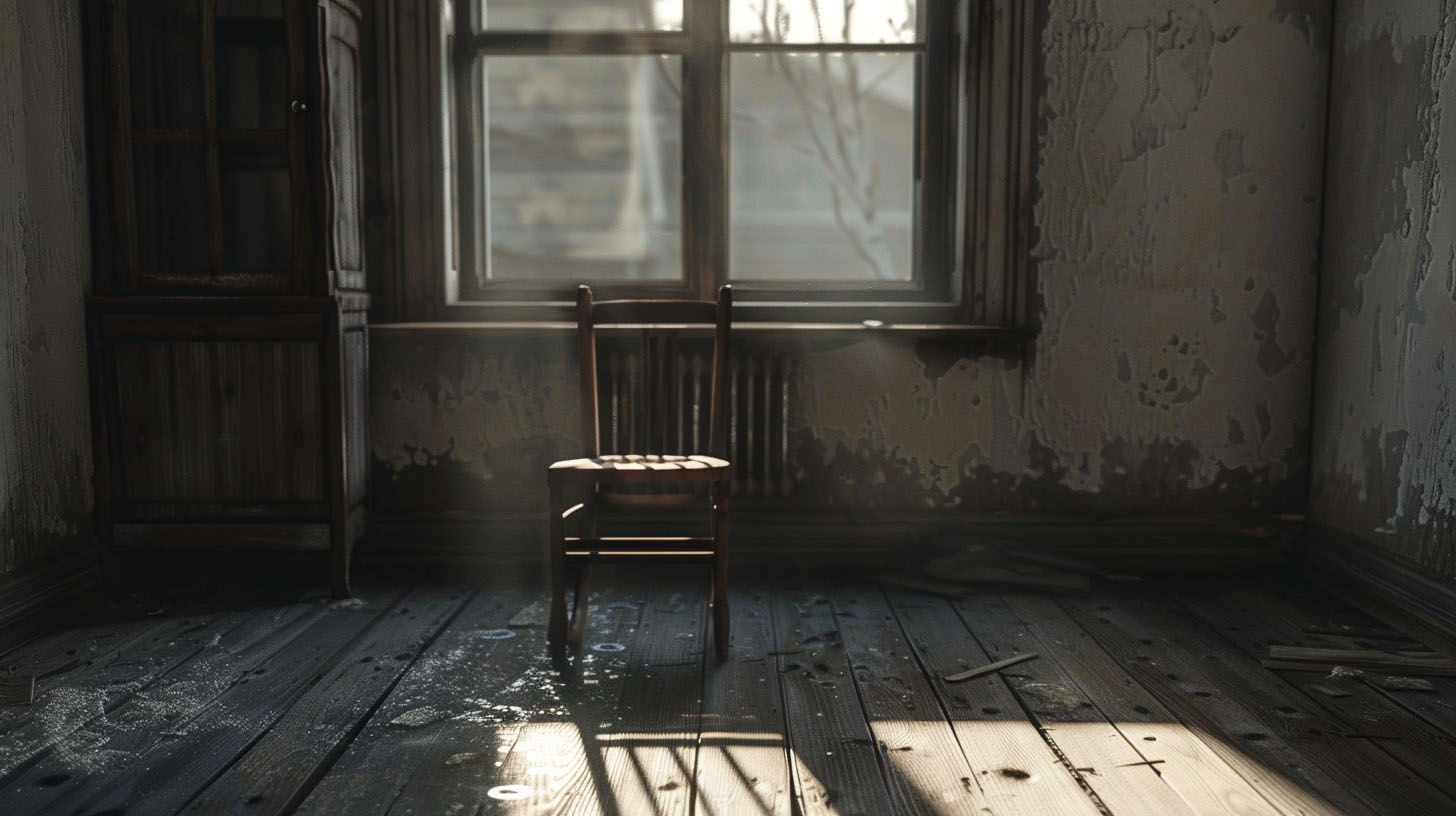
What this is
Sooner or Later is a one-man play with music about Jack Mercer, a man who has spent his working life knowing what to do. He knows when something needs adjusting, when it needs more time, when to intervene, and when a problem can safely be left alone.
As his time at work comes to an end, Jack has one final responsibility: to leave things safe and running without him. What follows is the more difficult journey from knowing when something is finished to knowing what to do next.
Told through dialogue, music, silence, physical action and an evolving world of sound, the play moves from Jack's working environment to a railway waiting room, where there is no longer a machine depending on him, only a suitcase, a worn letter, and somewhere he knows he should go.
We never discover exactly what waits for Jack at the other end. The journey belongs as much to the audience as it does to him.
These recordings are demo sketches created to communicate melody, lyric, rhythm, atmosphere and dramatic placement. They are not intended to represent final arrangements, orchestration, or performance style.
The role is written for a mature actor rather than a conventional musical-theatre performer. Vocals may be spoken-sung, conversational and grounded in thought rather than projection. The songs belong to Jack's world and emerge naturally from memory, rhythm and the sounds around him.
How the music functions
Music develops alongside Jack. At first, sound is something he listens to, diagnoses and controls. The machine has a rhythm. The guitar belongs to his working life. Gradually, other sounds begin to enter: sounds he cannot entirely identify, account for or control.
As the play progresses, the music begins to move beyond him. Jack can join it, resist it, interrupt it or allow it to continue without him. By the time the machine has gone, the audience has learned to listen to Jack's world in much the same way that he does.
The guitar is not a virtuoso instrument but a familiar companion, worn through use and picked up almost without thought. At moments Jack plays because the music carries something further than speech can. At others, he simply plays because he enjoys it.
The songs do not stop the dramatic action. Sometimes they emerge from it; sometimes the music continues when Jack cannot. Sound, silence and music form part of the action of the play.
Staging & scale
Sooner or Later is designed as a contained, actor-led production. The physical world is spare and suggestive rather than naturalistic. In the first two acts, a machine, chair, work lamp and guitar define Jack's working environment. In the final act, that world gives way to a railway waiting room: a bench, a clock, a platform door, a suitcase and a lunch box.
Much of the dramatic action lies in behaviour rather than dialogue. Listening, hesitation, repeated physical actions, objects and silence accumulate meaning as Jack's relationship to them changes.
Sound and lighting allow the production to create a world considerably larger than the physical stage: machinery, distant rooms, footsteps, trains, announcements and music gradually extend the space around Jack. The production can therefore remain intimate while allowing the theatrical world to expand around a single performer.
1. If It’s Broken, I Can Fix It
Opening work-song. Spoken-sung. The rhythm of avoidance — a man who knows how to keep moving.
2. I Was There But Not Enough
Memory intrusion. Time moves without permission.
3. Take Your Hands Off The Wheel
Resistance cracks. The body remembers before the mind does.
4. Sooner Or Later
Acceptance without resolution. Stillness, not closure.
Confidential materials for professional review only. No copying or circulation.